

The AC Inevitability: Why the Debate Must Shift From "Whether" to "How"
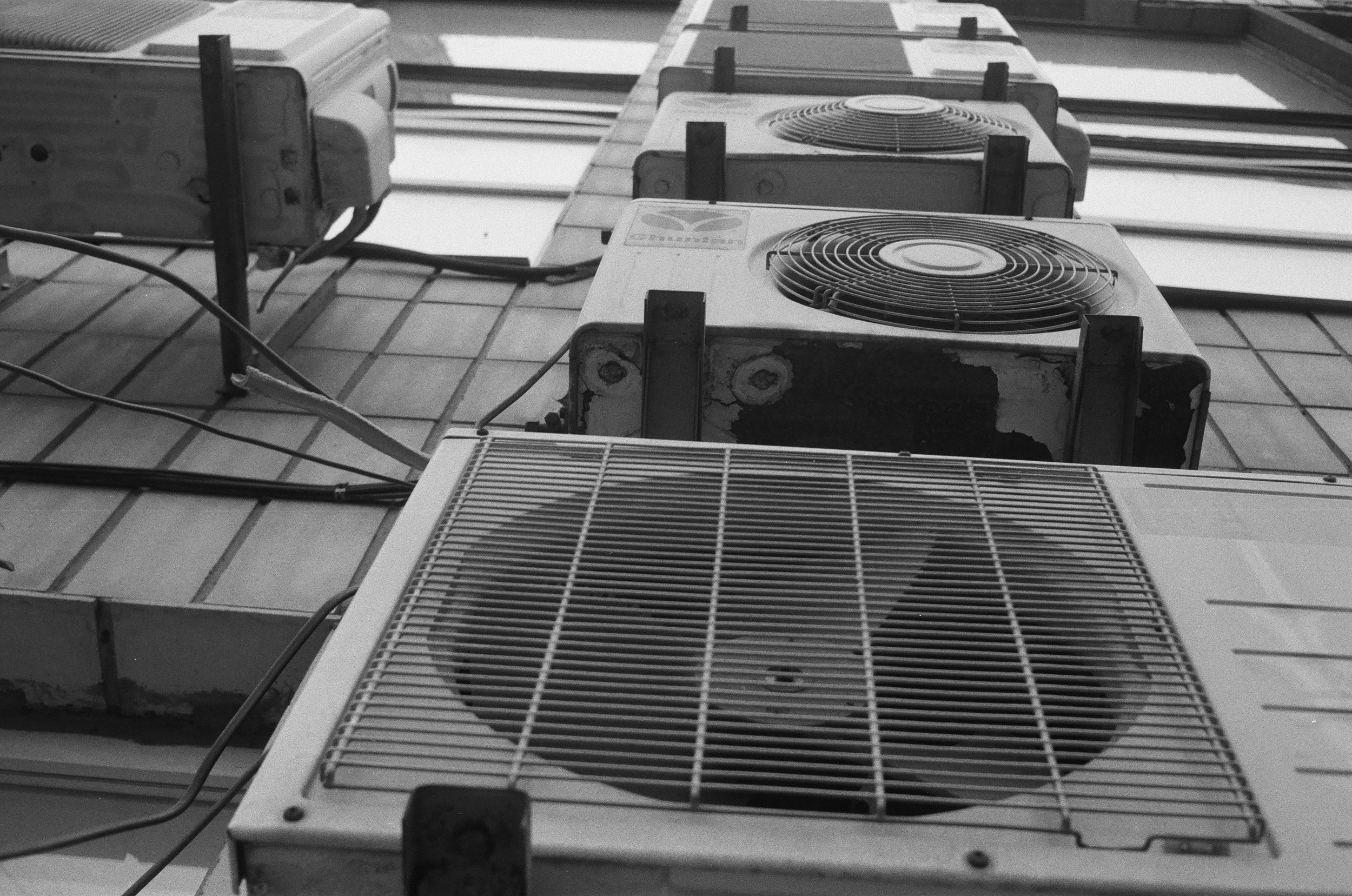
Image source: Illia Horokhovsky on Unsplash
The standard narrative around European air conditioning usually follows a familiar, seasonal script. Summer hits, temperatures break records, and headlines fill with cultural commentary on Europe’s historical resistance to cooling. On one side, regulatory and architectural barriers are blamed for holding back adoption. On the other are valid environmental concerns for a catastrophic new strain on our regional grids.
But framing this as a binary choice to install AC or not to install AC is oversimplifying the reality facing commercial property and facility managers today.
The real debate isn't whether cooling is coming. According to the International Energy Agency (IEA), air conditioning is the fastest-growing energy use in buildings globally, and European AC capacity is on track to double by 2030 (IEA).
Research from the European Commission also indicates that heatwaves are no longer summer anomalies; extreme heat events are now causing an estimated 1.4% drop in regional labour productivity during peak months, making indoor climate control a baseline requirement for employee health and operational safety (European Commission).
The actual debate we need to have is how we integrate this massive new energy load without driving up carbon emissions or blowing corporate energy budgets. Air conditioning does not have to be an environmental or financial disaster. If your business is navigating the integration of cooling infrastructure, here are five practical, data-driven strategies to ensure you do it efficiently.
1. Capitalise on Solar Parallelism
Unlike space heating, which spikes on freezing, dark winter mornings when renewables are at their lowest, cooling demand has a unique macroeconomic advantage. Its peak usage directly matches peak solar generation hours.
When outdoor temperatures are highest and your AC units are working their hardest, on-site solar arrays are generally operating at maximum capacity. According to data published by energy think-tank Ember, a standard rooftop solar array can easily generate enough energy during a heatwave to power hours of air conditioning completely for free.
For commercial properties with daytime occupancy, this alignment is a massive financial shield. By directly feeding your cooling systems from local, on-site solar PV, you maximize your self-consumption rate, displace expensive peak-tariff grid electricity, and inherently justify the cooling infrastructure upgrade.
2. Eradicate the After-Hours Ghost Load
One of the largest, most unnecessary strains on a commercial energy budget doesn't come from keeping an active workforce comfortable. It comes from cooling a completely empty building.
A comprehensive study by the Lawrence Berkeley National Laboratory revealed that up to 30% of office air conditioning energy is entirely wasted by running in vacant spaces, meeting rooms, and empty wings.
In the UK, data from the Building Research Establishment (BRE) backed this up, finding that non-domestic cooling systems are frequently left running overnight and over weekends simply due to rigid manual scheduling or human error.
Businesses must institute strict schedule overrides. When the office empties out, your HVAC systems should either power down entirely or transition to a wider temperature deadband, allowing the building to naturally drift up to 26°C or 27°C before any mechanical cooling triggers.
3. Transition to Occupancy-Based Dynamic Cooling
With hybrid work models keeping office densities fluctuating throughout the week, aggressively cooling a floor that is only at 10% capacity is a massive drain on resources.
You should integrate your cooling infrastructure with localized controls and occupancy data. By isolating distinct office zones, server rooms, and client meeting spaces, you ensure your AC units only work hard in rooms that are actively being used. If an office wing or a boardroom sits empty for the afternoon, the system should automatically throttle down.
4. Beat Peak Tariffs via Thermal Pre-Cooling
If your facility operates on a time-of-use or dynamic electricity tariff, grid prices naturally skyrocket during late-afternoon peak periods. Running your AC at full throttle during these hours drastically impacts your operational expenditure. Making use of time of day tariffs is an especially smart way to save as you reconfigure operations to manage your demand.
Run your AC slightly harder during the late morning or early afternoon when local solar generation is abundant or grid electricity is cheap. By safely pre-cooling the physical structure of your building, allowing the floors and walls to act like a thermal battery, you can throttle the HVAC units down during the expensive late-afternoon grid peak. The building will slowly hold onto that cold air and resist the afternoon outdoor heat, keeping your staff comfortable without drawing high-tariff power.
5. Validate Your Strategy with Circuit-Level Submetering
Here at GridDuck we have a saying: you cannot manage what you do not measure.
Relying on a single monthly utility bill will never show you how your AC is actually performing, nor will it flag if a system is cycling inefficiently or fighting against your heating.
Cooling can easily account for 29% of an inefficient office's annual energy spend (British Gas), yet data-driven efficiency practices can cut overall energy bills by up to 65% (Carbon Trust).
Installing granular, real-time submeters on your HVAC distribution boards gives your operations team the visibility to catch anomalies instantly, verify that after-hours shutoffs actually executed, and calculate the exact return on investment of your cooling strategy.
The conversation around European air conditioning needs to move past cultural hesitation and environmental guilt. Cooling is becoming an operational necessity for businesses across the continent.
For all intents and purposes, it’s not whether to adopt AC but how. By intentionally pairing your cooling load with localized renewables, eliminating after-hours waste, and monitoring your assets via granular submetering, your business can keep its workforce cool while keeping its carbon footprint entirely frozen.
If your business is looking for ways to become more energy efficient, or has questions about optimising AC, please contact us at hello@gridduck.com for more information or to arrange a meeting.